
The Gilded Cage
The real thieves exposed

In 1900, a man’s quality bespoke suit with all the trimmings would run you about $25, or one ounce of gold. In 2026, a quality suit will run you about $4,000, or one ounce of gold.
In 1960, residential electricity ran about $0.026/kWh, or $0.29 in current paper. In 2026, that 1 kWh runs about $0.18. Electricity is actually $0.10/kWh cheaper now than 65 years ago.
The US national average for a gallon of regular gasoline in 1960 was $0.31, which is about $3.40 today. Now it’s about $2.81 per gallon, according to AAA, or roughly 18% cheaper.
In 1960, the median household income in the United States was approximately $5,600 per year. That’s the midpoint where half of households earned more and half earned less. According to the most recent data from the U.S. Census Bureau, the median household income in 2024 was about $83,730 per year. In 1960 dollars, the median income today is $7,940, or about 40% higher.
Wait! What?
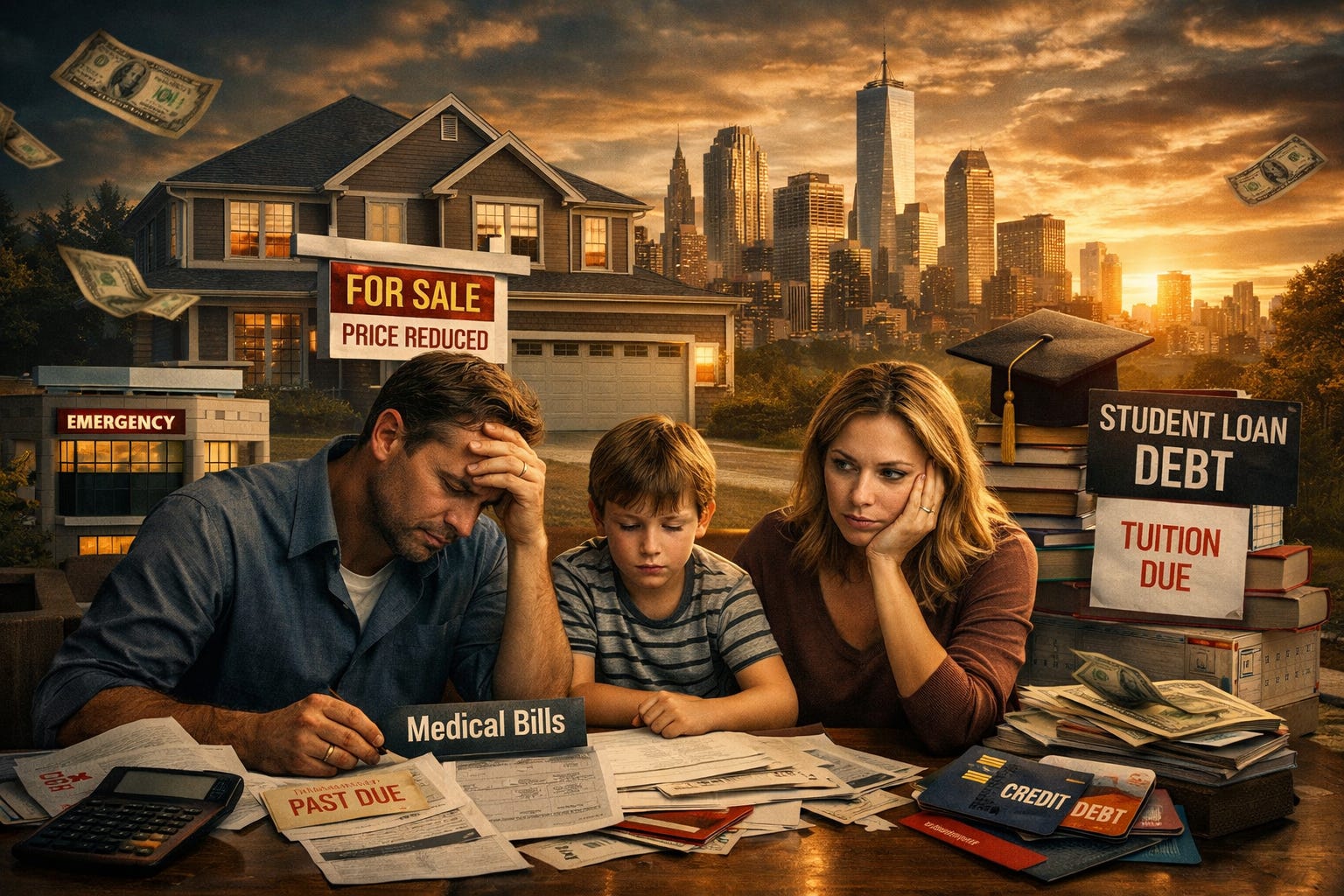
How is it that median household incomes have risen by about 40%, while adjusted prices (household expenses) have remained the same or decreased, and yet no one seems to have any money now?
If incomes have gone up, while key prices have been stable or decreased, where is all the “extra” money going (purchasing power)?
The short answer: it’s been absorbed by the “cost of living infrastructure” — housing, healthcare, and education — and, to a lesser extent, financialization.
Estimates from historical government studies (CBO & IRS data) put U.S. households’ total tax burden in 1960 at approximately ≈ 24% – 26% of pre-tax household income, including local, state and federal taxes. Current estimates (Tax Policy Center / CBO / BEA data) show total U.S. household tax burdens around ≈ 27% – 30% of median household pre-tax income.
In 1960, the median house price was roughly 2.2× median household income. Today, it’s 5×–6× median income nationally, and much higher in major metros (8×–12× in NYC or SF). Property taxes, mortgage interest, and maintenance also scale up with home value, compounding the load. Housing eats roughly 30%–35% of disposable income today, compared with 20% or less in 1960.
In 1960, healthcare spending was 5% of GDP, and an ordinary household could pay a doctor out-of-pocket. By 2025, healthcare exceeds 18% of GDP, with average premiums, co-pays, and drug prices ballooning. Even employer-provided insurance effectively comes out of wages — economists view it as “hidden income transfer”. Healthcare now consumes roughly 15%–20% of household spending, versus 4%–5% in 1960.
In 1960, public university tuition averaged $100–$300 per year (≈ $1,000–$3,000 in today’s dollars). Now, average tuition + fees run $10,000–$15,000 per year for public universities and $40,000+ for privates. Student debt exceeds $1.6 trillion, effectively a drag on lifetime disposable income for younger households. Education costs have risen roughly 6×–8× in real terms since 1960.
Since the 1980s, a growing share of the economy’s gains has gone to:
Debt service (mortgages, credit cards, student loans, car loans);
Rents, insurance, and fees (banks, telecom, software subscriptions); and
Corporate profits (especially in finance, tech, and healthcare).
Productivity gains that once flowed into wages now flow into asset values and shareholder returns. Median workers benefit less directly; they pay higher rents and fees instead.
In 1960, after taxes, housing, and essentials, households had a relatively large discretionary share for savings, leisure, and goods. Today, even with higher real incomes, fixed costs dominate. The money left over after fixed expenses has dropped from roughly 30% in 1960, to less than 10% now.
Policy: Post-1971 fiat era + deregulated finance → asset inflation and debt dependency.
Globalization: Suppressed goods prices (cheap imports), but hollowed out wage growth.
Cartelization: Healthcare, education, and housing are quasi-protected sectors with little real competition.
Financial incentives: Credit expansion inflated prices of inelastic goods (land, tuition, medical care).
In case your eyes glazed over about half way into this mess, buying everything with credit cards and long-term borrowing for housing and mobility, plus corporate greed and globalization have eaten up our lives. It was all aided and abetted by compliant governments that favored corporations over taxpayers in fiscal policies and regulations, and it was paid for with higher taxes at every level.
The introduction of E-Z Credit and charge-a-plates in the 1920s started a vicious cycle of living on tomorrow’s income today. Consequently, the harder we work, the behinder we get, and it’s almost impossible to get out of it. If the vast majority of folks could extract themselves from this tar baby, it would completely reverse the power dynamics of our current economic morass. Governments and corporations, however, have no incentive to help us do that.
But alas! We just get more stuck.
=====
It’s not easy coming up with a good flick about economics and finance, without resorting to Al Capone, but I think you’ll enjoy The Big Short (2015), a dark, satirical look at who and how we are being screwed. Director Adam McKay doesn’t go all artsy on the material, and Christian Bale and Steve Carell turn in solid performances, as they dramatize the 2008 financial melt-down and the corruption behind it.
Contemplating the future past on the Far Side:
E-book: Paper Golem: Corporate Personhood & the Legal Fiction
Contact Bernard Grover: bernard (at) radiofarside (dot) com
Radio Far Side, published (mostly) every Sun/Wed at 7a CST/7p WIB, is a labour of love. We don’t use a paywall, and we don’t sell stuff. We just create things to inform and entertain. But like any good busker on the digital mean streets, we put our hat down and if you feel inspired, drop a coin in to show your appreciation:
BTC wallet: bc1qth6drgzcyt7vlxxpvqh6erjm0lmaemwsvf0272
XRP wallet: rMSQzLyE3RHacCLwYPADBbq4RHQ71HpCzw

The word of the day is Bifurcation-buy and pay later, where is Alfred E Neuman when we need him the most. We live in a world where corruption is rewarded and honesty becomes a sacrifice.
Remember how FDR stole American's gold in order to save the banks? Purchasing power......